


News
The Ultimate Guide to Adorable and Safe Halloween Costumes for Pets
Aug
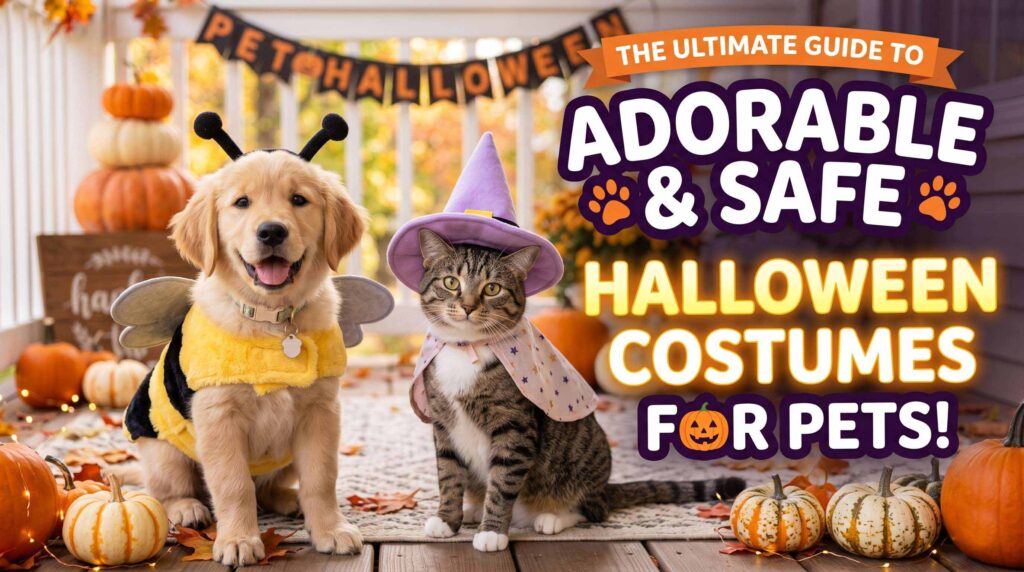
Halloween is no longer just a holiday for the two-legged members of the family. Across the United States, pet parents are increasingly including their dogs and cats in the spooky season festivities. There is nothing quite as heartwarming—or highly shareable on social media—as a Golden Retriever dressed as a majestic superhero or a grumpy tabby cat pulling off a wicked witch hat.
However, as thrilling as it is to dress up our furry best friends, their comfort and well-being must always come first. A costume that looks fantastic but restricts movement or causes an allergic reaction can quickly turn a fun night into a stressful ordeal for your pet.
In this comprehensive, 2,000-word guide, we will explore the most adorable Halloween costumes for pets that are guaranteed to get likes, while diving deep into expert advice on how to select outfits that are safe, comfortable, and completely allergy-free.
Why We Love Dressing Up Our Pets for Halloween
In recent years, the pet costume industry has boomed. For many pet owners, dogs and cats are beloved children, and naturally, they deserve a spot in the family’s themed Halloween group costume.
Beyond the personal joy, there is a massive social media appeal. Scroll through Instagram or TikTok in October, and you will see endless feeds dominated by pets in costumes. Photos and videos of dogs and cats dressed as superheroes, tiny witches, or walking hot dogs consistently receive a massive amount of interaction. People simply cannot resist the juxtaposition of an innocent, fluffy animal embodying a funny or spooky character.
But with this trend comes a responsibility. Viral photos should never come at the expense of a pet’s comfort. Striking the perfect balance between an adorable aesthetic and a safe, pet-friendly design is the ultimate goal for any responsible pet parent this Halloween.
Top Adorable Pet Costume Ideas Guaranteed to Melt Hearts
If you are looking for costume inspiration that balances cuteness with ease of wear, here are the top trending and classic choices for pets this Halloween season.
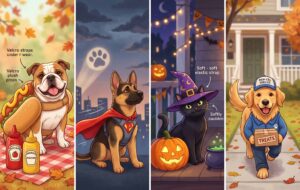
1. The Classic Hot Dog (Frankfurter)
The hot dog costume is a timeless classic, especially popular for Dachshunds (wiener dogs), though it is equally hilarious on a sturdy Bulldog or a fluffy Corgi.
-
Why it works: Most hot dog costumes are designed as simple, plush harnesses that attach with Velcro under the belly and chest. This leaves the pet’s legs, head, and tail completely free, ensuring maximum mobility.
-
Photo Tip: Place your “hot dog” next to a bottle of ketchup and mustard (real or plush props) for a highly interactive and guaranteed-to-smile social media post.
2. Caped Superheroes
Whether your pet is saving the city as “Bark-man” or “Super-cat,” superhero costumes are universally beloved.
-
Why it works: The best superhero costumes rely strictly on a lightweight cape and perhaps a soft, breathable chest emblem. Avoid full-body spandex suits, which can overheat your pet and restrict their natural movement. A simple cape attached to a collar is often enough to convey the theme without causing stress.
-
Photo Tip: Use a fan on a low setting to get that majestic, wind-blown cape effect while snapping photos from a low angle to make your pet look heroic.
3. The Wicked Witch and Spooky Wizard
For pets that tolerate headwear, a soft, plush witch or wizard hat can be incredibly charming.
-
Why it works: Cats, in particular, look delightfully mischievous in pointy witch hats. If your pet dislikes things on their head, you can opt for a Halloween-themed bandana or a lightweight cape decorated with stars and moons.
-
Photo Tip: Situate your pet next to a carved jack-o’-lantern or a prop cauldron. The contrast of the spooky props with their cute face is perfect for Halloween engagement.
4. The Delivery Driver
Costumes that create an optical illusion—like the front-walking delivery driver holding a package—have taken the internet by storm.
-
Why it works: These costumes slide over the pet’s front legs and chest. When the dog walks toward the camera, it looks like a tiny human carrying a box.
-
Caution: These costumes can sometimes impede the natural gait of your dog. They are best reserved for a quick 10-minute photoshoot rather than for a long evening of trick-or-treating.
Safety First: The Golden Rules of Pet Halloween Costumes
Before you hit the “checkout” button on that adorable outfit, it is vital to evaluate it for safety. Pets do not understand the concept of wearing clothes, and an improperly designed costume can pose severe hazards.
Avoid Choking Hazards
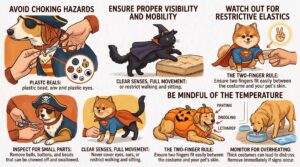
Many cheap, mass-produced pet costumes come with dangling bells, buttons, beads, plastic eyes, or fake fur that can easily be chewed off and swallowed.
-
The Danger: Swallowing these items can lead to intestinal blockages, which are life-threatening and require emergency surgery.
-
The Solution: Inspect the costume thoroughly. If there are small, easily detachable parts, cut them off before putting the costume on your pet. Opt for costumes where the details are printed or embroidered directly onto the fabric.
Ensure Proper Visibility and Mobility
A pet’s primary way of interacting with the world is through their senses. A costume should never block their sight, hearing, or sense of smell.
-
Vision: Masks and low-hanging hats can slide down over your pet’s eyes. If a dog or cat cannot see, they will quickly panic, potentially running into the street or injuring themselves.
-
Hearing: Avoid costumes that tightly cover your pet’s ears. Cats, in particular, rely heavily on their ears for balance and environmental awareness; pinning them down can cause immense distress.
-
Movement: Your pet must be able to walk, run, sit, lay down, and relieve themselves without any hindrance. If the costume prevents them from fully extending their legs or lifting their tail, it is too restrictive.
Watch Out for Restrictive Elastics
Tight elastic bands around the neck, paws, or tail can cut off circulation. When trying the costume on your pet, you should be able to comfortably fit two fingers between the costume and your pet’s skin—just like you would with a regular collar.
Be Mindful of the Temperature
Pets already have a permanent, built-in fur coat. Layering synthetic materials on top of that can easily lead to overheating, especially in warmer southern states where Halloween nights can still be balmy.
-
Signs of Overheating: Excessive panting, drooling, lethargy, or bright red gums. If you notice any of these signs, remove the costume immediately and provide fresh, cool water.
Comfort is Key: How to Choose a Stress-Free Costume
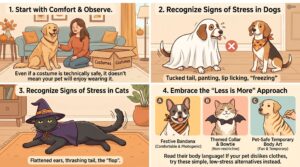
Even if a costume is technically safe, it doesn’t mean your pet will enjoy wearing it. Understanding your pet’s personality and body language is the key to a stress-free Halloween.
Reading Your Pet’s Body Language
Pets communicate their discomfort clearly if we know what to look for.
-
Signs of Stress in Dogs: Tucked tail, pacing, excessive lip licking, yawning, freezing in place (refusing to move), or trying to rub the costume off against furniture.
-
Signs of Stress in Cats: Flattened ears, a thrashing tail, hiding under furniture, hissing, or the classic “flop” (where the cat falls onto its side and refuses to stand up).
If your pet exhibits these behaviors, do not force the issue. Take the costume off and try a simpler alternative.
The “Less is More” Approach
If your pet hates wearing clothes, you do not have to skip the festivities entirely. There are plenty of minimalist, highly comfortable alternatives:
-
Festive Bandanas: A simple orange and black bandana or a collar slipcover is lightweight, non-restrictive, and highly photogenic.
-
Themed Collars and Bowties: A cute pumpkin-patterned collar or a tiny bat-wing bowtie adds holiday spirit without triggering your pet’s anxiety.
-
Pet-Safe Paint: For light-colored, short-haired dogs, you can use strictly pet-safe, non-toxic, veterinarian-approved pet chalk or blow-pen dyes to create temporary “tiger stripes” or “leopard spots.” Never use human hair dye, food coloring, or regular paint, as these can be highly toxic if licked.
Preventing Pet Allergies: Choosing the Right Fabrics
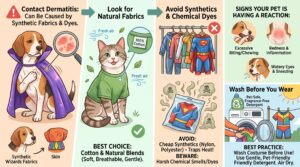
A heavily overlooked aspect of pet costumes is the material they are made of. Just like humans, dogs and cats can suffer from contact dermatitis—an allergic skin reaction caused by synthetic fabrics, harsh dyes, or chemicals used in manufacturing.
Hypoallergenic Materials to Look For
When shopping for a costume, check the clothing tag just as you would for yourself.
-
Cotton and Natural Blends: Breathable, soft natural fibers like 100% cotton are the best choices. They allow air to circulate against the skin and are much less likely to cause irritation or static electricity (which can be very annoying to a furry pet).
-
Avoid Cheap Synthetics: Nylon, cheap polyester, and plastic materials do not breathe. They trap heat and moisture against the pet’s skin, which can cause intense itching, rashes, and hot spots.
-
Beware of Toxic Dyes: Costumes with strong chemical smells right out of the bag are a red flag. They may be treated with harsh industrial dyes or flame retardants that can irritate your pet’s skin and respiratory system.
Signs Your Pet is Having an Allergic Reaction
If your pet is wearing a costume and begins exhibiting any of the following symptoms, remove the outfit immediately:
-
Excessive scratching, biting, or chewing at their skin.
-
Redness or inflammation on the belly, armpits, or groin (where the fur is thinnest).
-
Hives or raised bumps.
-
Watery eyes or sneezing (which can be triggered by dust or chemical odors in the fabric).
Wash Before You Wear
One of the easiest ways to prevent an allergic reaction is to wash the costume before putting it on your pet. Use a hypoallergenic, fragrance-free, pet-safe laundry detergent to strip away any lingering manufacturing chemicals, dust, or excess dye. Let the costume air dry to prevent shrinking.
How to Acclimate Your Pet to Their Halloween Costume
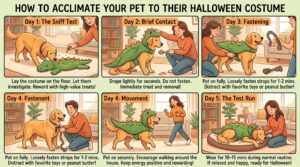
You should never buy a costume on October 31st and immediately strap it onto your dog or cat. To ensure they are comfortable and happy, you need to introduce the costume gradually over several days. Use this 5-day acclimation plan:
-
Day 1: The Sniff Test. Lay the costume on the floor. Let your pet sniff and investigate it on their own terms. Whenever they show interest in it, reward them with a high-value treat and praise.
-
Day 2: Brief Contact. Gently drape a piece of the costume over your pet’s back for just a few seconds. Do not fasten it. Give them a treat and immediately remove it. Repeat this a few times.
-
Day 3: Fastening. Put the costume on your pet and loosely fasten the straps. Leave it on for no more than one or two minutes while distracting them with their favorite toy or a spoonful of peanut butter. Take it off before they show any signs of stress.
-
Day 4: Movement. Put the costume on securely and encourage your pet to walk around the living room. Keep the energy light, happy, and positive. Reward them generously.
-
Day 5: The Test Run. Have them wear the costume for 10–15 minutes while going about their normal indoor routine. If they seem relaxed and happy, you are ready for Halloween!
Tips for the Perfect Pet Halloween Photoshoot
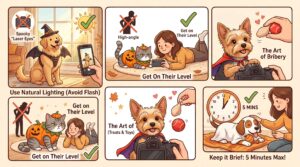
Once you have a safe, comfortable, and allergy-free costume, it’s time to capture that viral photo. Here are a few professional tips for photographing pets:
-
Use Natural Lighting: Avoid harsh overhead lights or the flash on your smartphone. The flash can cause “laser eyes” in pets and easily spook them. Instead, take photos near a large window during the day, or during the “golden hour” just before sunset.
-
Get on Their Level: Do not take photos pointing your camera down at your pet. Sit or lie on the floor so you are eye-level with them. This creates a much more intimate, engaging portrait.
-
The Art of Bribery: Have a squeaky toy or a high-value treat (like a piece of plain boiled chicken) held right directly above your camera lens. This guarantees they will look directly into the camera with an alert, happy expression.
-
Keep it Brief: Pets have short attention spans. Aim to get your shots within a 5-minute window. If your pet gets bored or stressed, end the session and try again later.
Frequently Asked Questions (FAQs) About Pet Costumes
Q: How long is it safe for my dog to wear their Halloween costume?
A: As a general rule, pets should only wear costumes for short periods—usually no more than 1 to 2 hours at a time, and only while supervised. Costumes are not meant for all-day wear. If your pet is just wearing a themed bandana, they can wear it all day, provided it fits properly.
Q: Is it safe to take my costumed dog trick-or-treating?
A: It depends entirely on your dog’s temperament. If your dog is well-socialized, loves crowds, and is comfortable in their costume, it can be a fun outing. However, the combination of a restricting costume, dark streets, loud noises, and strangers in masks can be a recipe for sensory overload and anxiety for many dogs. If in doubt, leave them safe at home in a quiet room with a puzzle toy.
Q: My cat absolutely hates clothes. What can I do instead?
A: Never force a cat into a costume. It can severely damage the bond of trust between you. Instead, opt for a Halloween-themed collar with a small, breakaway bowtie. Alternatively, you can edit your photos digitally! Snap a great photo of your cat, and use apps or photo editing software to digitally add a witch hat, bat wings, or a spooky background. It’s 100% stress-free for the cat and still looks fantastic online.
Q: Are light-up or glowing costumes safe?
A: Costumes with LED lights can be safe and are actually great for nighttime visibility. However, you must ensure the battery pack is securely enclosed, waterproof, and impossible for the pet to chew on. Batteries are highly toxic if punctured or swallowed.
Conclusion
Including your pets in the Halloween fun is a wonderful way to celebrate the season and create lasting memories. Whether your golden retriever is bounding around as a superhero or your pug is waddling as a hot dog, those adorable moments are priceless.
However, as pet parents, it is our ultimate responsibility to ensure we are prioritizing their health, comfort, and safety over a cute photograph. By choosing the right size, avoiding choking hazards, opting for breathable, hypoallergenic fabrics, and introducing the costume slowly, you can guarantee a spooktacular Halloween that is completely stress-free.
This Halloween, let’s keep our furry friends safe, comfortable, and undeniably adorable. Happy trick-or-treating to you and your pets!
