


Holiday Gifts, Family Gifts
More Than a Christmas Gift: The Memory-Holding Power of Embroidered Christmas Shirts
Dec
Every holiday season brings with it a quiet magic—moments that weave themselves into our lives without fanfare, only to resurface years later with surprising clarity. A scent of cinnamon, the first cold morning of December, the soft murmur of family gatherings, the glow of warm lights against winter darkness. Yet among all these triggers of memory, few objects carry emotional weight as beautifully as clothing, especially pieces made with embroidery. An embroidered pattern has an uncanny ability to hold stories, to store emotions, to protect fragments of a certain year or a certain person. It turns fabric into something more than an object. It becomes a memory capsule.
For many people, an embroidered Christmas shirt is more than a seasonal item; it’s a reminder of a particular December—the one when life felt different, or when a gift was given with tenderness, or when a tiny stitched symbol captured the essence of a moment. Embroidery has the unique power to preserve memory because it speaks through texture, intention, and symbolism. It carries not just aesthetic beauty but emotional residue.
This article explores why embroidered clothing feels like a vessel of holiday memories, how custom embroidery transforms simple garments into deeply personal keepsakes, and why a single shirt can become a cherished tradition every winter.
The Emotion Embedded in Stitches
Embroidery has always been linked with sentiment. Unlike printed graphics, which appear instantly and uniformly, embroidery grows one stitch at a time. Each thread is a gesture, a pause, a breath. Even when created with modern tools, the visual language of embroidery remains unmistakably human. Stitches feel deliberate. They resemble handwriting—slightly imperfect, deeply expressive, full of personality.
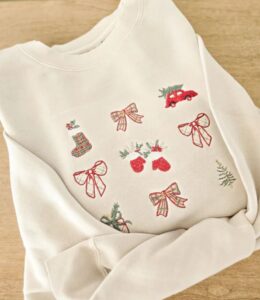
Because of this, the mind interprets embroidery as an act of care. A holiday shirt with stitched motifs feels more intentional than one simply printed with ink. The raised texture invites touch, and touch, in turn, evokes emotional proximity. The feeling of fingertips gliding over thread is strangely grounding. It reminds us of craftsmanship, patience, and effort.
During the holidays—when memories tend to surface and hearts lean toward nostalgia—these sensations become even more powerful. A small stitched star or snowflake carries warmth, not just visually but emotionally. It feels like a whisper from the past.
The Memory of Gift-Giving
Holiday memories often crystallize around gifts. Not because of the material objects themselves, but because of the moments attached to them: the person who gave them, the thought behind them, the emotion exchanged without words. A gift that involves embroidery feels especially meaningful because it suggests personalization. Someone chose those colors, that motif, that message.
When a person receives a christmas gift that includes stitching—maybe their initials, a small pet portrait, a holiday symbol that means something to them—it becomes an emotional artifact. It connects the giver and receiver through a shared symbol stitched into fabric. Years later, even if life has changed, that shirt still remembers. It carries the warmth of that December, the joy of that exchange, the softness of that moment.
Many people keep embroidered clothing not because they still wear it, but because it holds something irreplaceable. When they touch the thread, they can almost feel the presence of the person who gave it. It becomes a time capsule—quiet, intimate, loyal.
The Meaning Behind Holiday Motifs
One of the reasons embroidered holiday clothing feels like a keeper of memory is that symbols themselves carry meaning. A stitched reindeer might represent a winter trip that year. A tiny embroidered gingerbread man could recall a December spent baking with family. A red-stitched heart could symbolize a first Christmas with a partner.
Holiday motifs are rarely random. They are chosen because they resonate with something personal. The imagery becomes an emotional shorthand. Each winter, when the shirt reappears from the closet, the symbol speaks again.
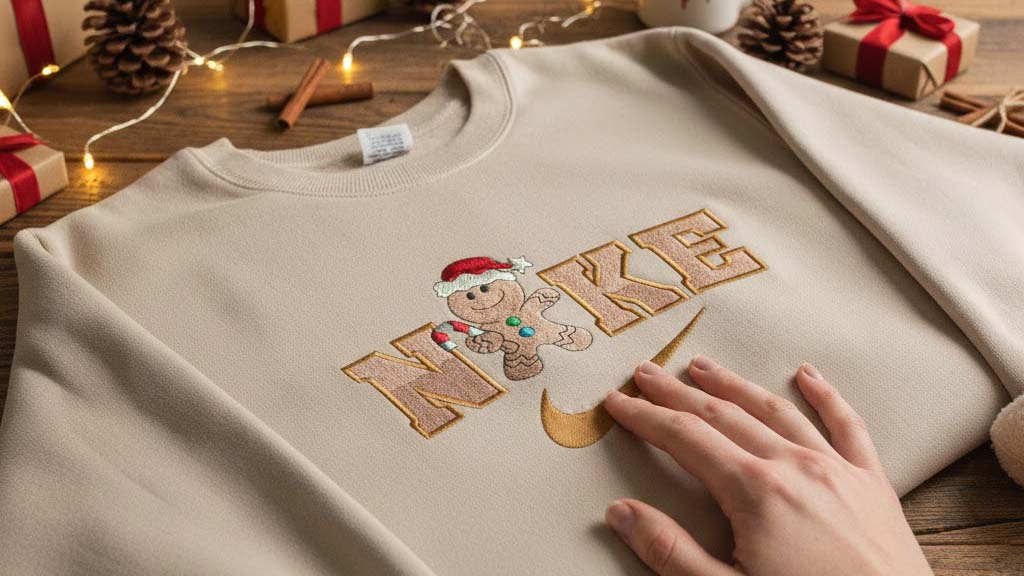
For example, a newly married couple may choose a custom embroidery design with the date of their first Christmas together—one small line of thread that captures a milestone. Parents may give their child a shirt with a hand-drawn doodle turned into embroidery, so that the garment becomes a soft container for childhood nostalgia. Friends might choose matching embroidered details to mark a shared holiday trip or tradition.
The motifs act like emotional bookmarks. They help the mind return to a moment that mattered.
The Ritual of Rediscovery
Perhaps the most magical aspect of embroidery is the ritual of finding it again. Every year, as the cold settles in and holiday clothing is pulled from storage, embroidered items stand out. Their texture catches the light differently. Their colors seem warmer. Their presence feels more alive.
Opening a drawer and seeing a familiar embroidered Christmas shirt can trigger a sense of déjà vu—a comforting mixture of memory and anticipation. The garment becomes a yearly companion. It reappears like an old friend who arrives every December carrying stories from the past.
The act of rediscovery is emotional. It can bring back the year when the shirt was first worn, the people in the room, the laughter shared, the surprises of that holiday. Embroidery makes these memories tactile. The thread becomes a bridge between years. It turns winter into a recurring chapter in a story that continues to grow.
The Personal History Woven into Thread
Clothing absorbs the lives we live in it. A holiday embroidered shirt might carry the scent of a winter market, the faint trace of cinnamon cookies, or the softness of a December night by a warm fire. It might hold memories of a specific event—an important conversation, a joyful dinner, a quiet moment of reflection, a reunion with someone missed.
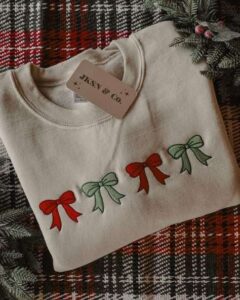
Embroidery preserves these experiences better than printed clothing because its texture changes slowly over time. Threads may soften, edges may fray slightly, colors may mellow. These subtle transformations feel like aging with grace, like a story deepening rather than fading. An embroidered motif ages with the wearer, gathering meaning along the way.
This is why many people never throw away embroidered items, even when they no longer fit. They feel like wearable diaries—small, silent witnesses of life.
The Story of the Year You Gave It
A powerful aspect of embroidery is its ability to mark a specific time. When someone chooses a garment as a christmas gift, they often anchor the moment to a detail in the design. The year might be stitched in tiny numbers. A location could be encoded through a symbol—like mountains, stars, or waves. A small icon might represent an inside joke shared only between two people.
Every time the recipient wears the shirt, it brings back the story of the year it was given. If life has changed since then, the embroidery becomes even more precious. It feels like holding onto a version of oneself, a version of a relationship, or a version of life that existed only in that winter.
For parents, giving embroidered clothing to a child becomes a way to freeze time. A little stitched design on a small shirt might one day sit in a memory box, carrying the essence of childhood winter wonder. For couples, a custom embroidery piece becomes a snapshot of a shared chapter. For friends, it becomes a patch of loyalty preserved in thread.
Tradition and the Continuity of Emotion
Holidays are built on traditions—some big, some small, some passed down, some newly created. Embroidery fits naturally into this landscape because it feels timeless. It does not rely on trends. It does not age poorly. It carries a classical beauty that transcends fashion cycles.
Families often develop rituals without planning to. A particular embroidered shirt becomes “the one you always wear when decorating the tree.” Another might become “the shirt from our first Christmas in this house.” A child might demand their favorite stitched piece every year for photos. These traditions are tiny but meaningful. They weave emotional continuity through the seasons.
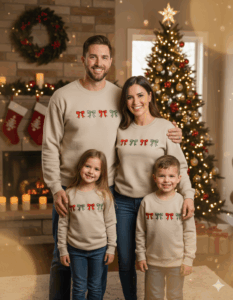
One day, years later, a family member might recall a lost loved one simply by touching the embroidered pattern they used to wear. Textile memory is powerful. It activates all senses—sight, touch, even smell. Embroidery, with its depth and character, preserves these sensory memories vividly.
The Quiet Permanence of Thread
There is a durability to embroidery that contributes to its emotional power. Printed designs can peel, crack, or fade dramatically. Embroidery softens but rarely disappears. It stays loyal to the fabric in a way that mirrors emotional loyalty. Threads cling, hold, and endure.
This permanence makes embroidered clothing feel more trustworthy as a memory capsule. You know the motif will still be clear years later. You know the texture will remain intact. You know the story will still be there, waiting, even when life shifts around you.
The longevity of embroidery gives memory a stable home.
Why Embroidery and Christmas Belong Together
Christmas is a season of reflection—of looking backward and forward at once. It’s a time when people feel more sentimental, more connected to their past, more in touch with traditions and loved ones. Embroidery aligns perfectly with this emotional landscape. It is slow, personal, rich with texture, and steeped in symbolism.
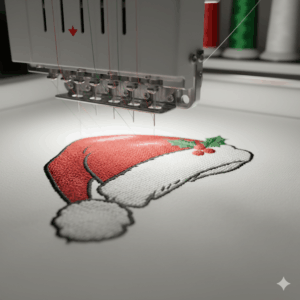
An embroidered garment feels rooted in nostalgia, even when brand new. It looks like it could have existed twenty years ago or could exist twenty years from now. This gives it a timeless emotional appeal that fits the holiday spirit.
Every December, when the world grows cold and lights glow warmer, embroidery becomes a small anchor for the heart. It reminds us of who we were, who we loved, and what mattered to us in each passing year.
Conclusion: A Shirt That Remembers
Embroidery is more than decoration. It is an emotional archive. In the world of holiday clothing, it becomes something even more profound—a gentle keeper of memories. A single embroidered Christmas shirt can hold the story of the year it was given, the people who celebrated together, the meaning behind each motif, and the warmth of moments that might otherwise fade.
Every winter, when it emerges from the closet again, it becomes a bridge between past and present. It whispers the memories stitched into its threads. It carries the laughter, the affection, the surprise, the comfort, and the tenderness of holidays gone by. In this way, embroidery keeps memories alive not by accident, but by nature.
The shirt remembers—so you don’t have to remember alone.
